

In this insightful guide, Larisa Mîrza explores how targeted, strategic reading instruction, not just general practice, can transform students’ performance on Cambridge exams and empower them as lifelong, analytical readers.
"are we teaching the kind of reading these assessments truly require?"
As teachers, we often take comfort in the fact that our students read widely and regularly. But if so many of them still struggle with Cambridge exams, it raises an essential question: are we teaching the kind of reading these assessments truly require?
To support students effectively, we need to look beyond general reading habits and focus on exam-specific reading skills—such as identifying the writer’s purpose, navigating complex question types, and interpreting texts under time pressure. Cambridge exams assess not just comprehension, but precision, inference, and the ability to engage critically with language. This means our classroom approach must shift from passive reading to strategic, analytical reading, tailored to the demands of each paper.
Even though students are already acquainted with the task types used in Cambridge reading papers (e.g., B1 Preliminary, B2 First, and C1 Advanced), they often need supplementary materials to complete them successfully. A high-level overview of the activities and their intended outcomes is as follows:
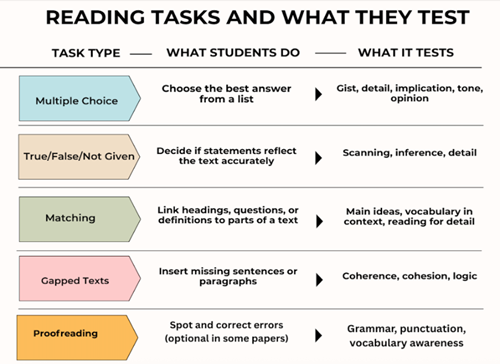
These aren't simply assignments; they're windows into the core skills that Cambridge wants to assess.
What Cambridge Exams Measure in Reading: The Cambridge reading tests go beyond just “understanding the text”. They require:
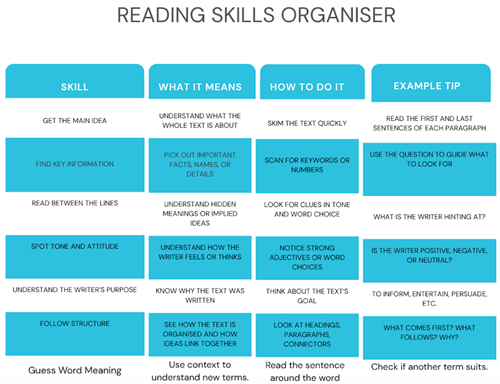
Helping students master these abilities prepares them for their exam and strengthens their reading skills in general.
Laying the Foundations: Task Awareness and Strategy Building
1. Build Awareness from Day One
Start by demystifying the exam. Go over the paper layout: how long it lasts, how many texts students will read, the types of questions they’ll face, and how answers are recorded. Make it visual—create a class poster or checklist they can refer to. Familiarity reduces anxiety.
Introduce each task type gradually. Don’t rush through them all in one week. Take time to explain the purpose of each and link it to real-life reading (e.g., “Matching headings is like choosing section titles for a blog post”). Invite students to reflect: “What skill do you think this task is testing?”
2. Develop Exam Skills Step by Step:
Consider a graded approach. At the start of the course, assign easier tasks so students can focus on one skill at a time. For instance:
➤ Fewer choices in multiple-choice
➤ Shortened texts
➤ Point out where to find answers
➤ As a class, discuss sample answers.
As your students get better, slowly make the tasks harder until they look like what they might face on an exam. Create a "strategy wall" for your class with all the techniques you've learnt so far and celebrate major achievements, like "the first full-length practice test."
Make texts straightforward to understand without making them too simplistic. To ease into reading, start with books that have easier language and fewer unfamiliar terms. Even if it is necessary to modify the text, it is important to maintain the original's tone and purpose. Be mindful of:
➤ Overly complex sentences
➤ Humour and cultural allusions require a high level of cultural knowledge.
➤ Texts that assume the reader shares the same background as the writer can be problematic.
The last step is to prepare students for the real world by providing them with full-level test texts. Also, encourage them to read widely. By employing class readers or brief articles on exam topics, students can boost their confidence and pick up new vocabulary.
- Moving Toward Real Exam Conditions At the onset of the semester, allocate sufficient time for students to collaborate, refer to dictionaries, and relax. Gradually remove these anchors until they are:
➤ Working solo
➤ Keeping to strict time limits
➤ Using no aids
➤ Filling out mock answer sheets
This gradual shift helps students become more resilient and less anxious on test day.
- Assisting Students to Read Faster and Better: Cambridge examinations are quite time-intensive. As the clock ticks down, even individuals who are confident in their understanding of the material may find it difficult to continue reading.
Here is how to help:
➤ Set a timer for each activity at the beginning of the course.
➤ Celebrate individuals who read promptly (but appropriately)
Assist students in:
➤ Avoiding focusing on unfamiliar words.
➤ Applying word-form cues, such as suffixes.
➤ Using the context to find out what a certain word means.
As an example, have the class read Little Red Riding Hood in a language that none of them speak but which they can still comprehend. This is known as the "Esperanto Trick." It's an excellent way of demonstrating that simply looking at the structure and clues could tell us more than we expect.
- Reading Strategies that Work: This is the procedure that students should follow for any task:
Read the title and try to guess what it is about.
Skim the text to get a sense of it.
Pay close attention to the questions.
Select the proper task approach.
Seek evidence in the text that supports your argument.
If you get stuck, go on and come back later.
This flexible structure develops trust and independence. To help students reflect on their reading techniques and determine which ones worked best, you can consider giving them reading logs to fill out.
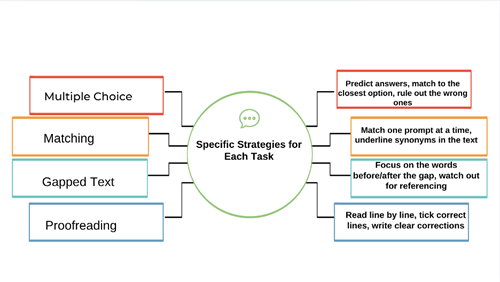
Remind students: it’s okay to guess if they’re unsure—blank answers never earn marks!
"Remind students: it’s okay to guess if they’re unsure—blank answers never earn marks!"
Make Strategy Practice Fun!
- Have a practice activity and then talk about what went well and what didn't.
- Create a list of "good" and "silly" tactics and have students sort them.
- Ask the students to demonstrate an approach to the rest of the class.
- Having a reading race with friends and keeping score makes it more enjoyable and practical.
What Works for Reading Exam Preparation?
- Helps you figure out what types of tasks the test expects you to do.
- Develop skills gradually, without rushing.
- Improves reading speed and comprehension over time.
- Prepares you for exam questions without stress.
- Reading increases confidence, intelligence, and autonomy.
What Are We Preparing Students For When They Read Beyond the Test?
Cambridge reading tests are not just lists of what you should know; they are chances to learn. It's not just about memorising forms or checking boxes during reading. It involves developing the ability to form connections, ask questions, and think critically. Teaching children to read with purpose, searching for patterns, and considering tone and purpose are more than simply preparing them for tests; it is about transforming their views and knowledge of the world.
So, ask yourself: Are we preparing children to pass tests, or are we developing readers who think, ask questions, and apply what they learn outside of school?


....................
To share your story, thoughts or ideas with the ISN community, please send your article draft directly to our editorial team here, or email us at [email protected]