
In the second of three articles in this series, Robert William Barnard and Ruan Hendrik Henn explore IEPs further, and share strategies to address learning challenges in every school and education system to help prevent achievement disparities between students with and without disabilities
The need for addressing learning challenges in all schools and education systems
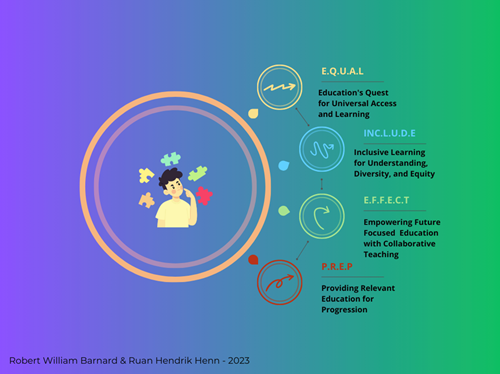
It is essential to address learning challenges in every school, regardless of whether it is a special education school or a school with mainstream education. Furthermore, addressing learning challenges in every school and education system can help prevent achievement disparities between students with and without disabilities. In many cases, students with special needs tend to experience lower academic and socio-emotional outcomes in comparison to their non-disabled peers (OECD, 2019). The achievement gap is a reflection of the unequal distribution of resources and support services, which puts students with special needs and learning challenges at risk of falling behind or struggling to succeed. The diagram below was created to try to identify strategies that could assist in bridging this gap for all students. The strategies mentioned in the diagram could be considered as tools that all systems could abide by. Realizing, of course, that not all systems would have to or even want to, these are strategies that could help any school or education system that wants to:
E.Q.U.A.L – Schools can strive to ensure that all students have equal access to quality education and resources regardless of their background, abilities, or socio-economic status. This can be achieved through policies that promote inclusive education, such as providing assistive technology and accommodations for students with disabilities, implementing anti-bullying programs, and creating a welcoming and supportive learning environment for all. Actively prompting change for students who have been previously disadvantaged through education and educational systems.
INC.L.U.D.E – Schools can adopt a more inclusive approach to education that recognizes and values the diversity of their student population. This can involve incorporating culturally responsive teaching practices, offering a curriculum that reflects the perspectives and experiences of diverse groups, and promoting equity in education by addressing disparities in academic achievement among different student groups.
E.F.F.E.C.T – Schools can focus on empowering students to become lifelong learners and prepare them for the challenges of the 21st century by adopting innovative teaching methods and incorporating technology into the classroom. Collaborative teaching and learning can help foster creativity, critical thinking, and problem-solving skills, whilst creating globally-minded citizens.
P.R.E.P – Schools can emphasize the idea that education should be focused on helping students progress and improve over time, regardless of their learning challenges or disabilities. It accents a growth mindset and a belief that all students can succeed with the right support and resources.
Implementing strategies such as these in schools and education systems requires a commitment to creating an inclusive, equitable, and effective learning environment that supports the diverse needs of all students. It also requires collaboration among educators, policymakers, and community stakeholders to promote and sustain these initiatives over time.
There are several reasons why implementing strategies such as these is significant in addressing diverse needs to ensure quality education for all:
Equality and Equity of Education
Access to quality education is a basic human right, and every student deserves equal opportunities to learn and succeed. However, equal education does not provide fair opportunities for those previously disadvantaged. Understanding fairness and equality goes hand in hand with increasing students' tolerance and appreciation for diverse learners. If students can distinguish between fair and equal, they're noticing how privilege impacts them and their classmates. Equality means treating everyone the same, whereas fairness means treating people according to their needs (Merrow, 2021). So then what should the next logical educational step be If learning challenges are not addressed in every school or if ever schools solely strive to provide equal education? It would mean that students with learning challenges will have limited access to quality education. This situation would not be in line with the principles of equity and equality. In that sense, the curriculum should be adapted to be more inclusive, where all students can benefit from learning and be successful in aspects.? Hence, there should be a major movement, across the world, towards equitable education. Not just equitable education, but education rooted in quality. According to United Nations: “Equitable quality education can lead to peace, social justice and sustainable development; the challenge is to aim for more than measurable short-term outcomes. This is an opportunity to put in place a framework for sustainable development that is aspirational and courageous.” (2015) In the hopes of creating curricula and education systems that are fruitful, they constantly need to be adapted, changed and improved on, where lacking.
Inclusive Education
Inclusive education recognizes that all students have unique learning needs, and efforts should be made to provide an environment that is responsive to their needs. An inclusive education system would incorporate strategies that support diverse learners, including those with learning challenges, within mainstream classrooms, rather than segregating them to separate schools or classrooms. Kim (2023) suggests that despite the increasing presence of children with disabilities in regular classrooms, the concept of “special” education in the US is still frequently associated with “separation”. To adequately prepare students for the realities of the world, an inclusive approach to education would be more logical. This promotes an environment of collaboration, respect, and acceptance, where all students value and even embrace the differences among each other. An inclusive education system aims to decrease factors such as segregation, stigmatization and discriminatory attitudes that would be present in a system otherwise and ultimately leads to positive academic, social, and emotional outcomes for all students. Moreover, addressing the learning challenges of all students in every school can help reduce the stigma that often accompanies students with disabilities. When students with disabilities are treated differently or placed in separate classes, they can feel ostracized and unfairly labelled. This is known as the “special education stigma” and it can negatively impact a student's self-esteem and academic performance (Rose, 2016). By working towards inclusive and equitable practices, schools can avoid perpetrating these stereotypes while creating a culture of equality and equity.
Effective Learning
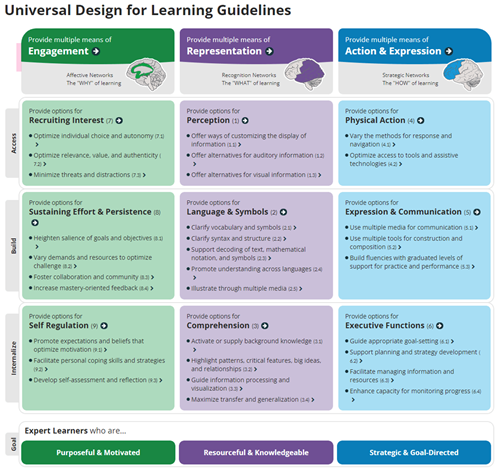
Addressing learning challenges in education systems and regular schools can improve the effectiveness of learning for all students. By incorporating interventions and strategies that support students with learning challenges, educators can create an environment where different types of learners can be successful. More so, such interventions will cater to the learning challenges that affect many students, therefore potentially increasing student engagement, motivation, and achievement in different subjects. To promote comprehensive education, schools can consider implementing Universal Design for Learning (UDL), which would guarantee that all students have access to appropriate support and accommodations for learning. This would eliminate the need for segregating students into ‘special education classes or schools, which can often carry negative and stigmatizing connotations. “Universal Design for Learning (UDL) is a framework developed by CAST, an Understood founding partner. UDL guides the design of learning experiences to proactively meet the needs of all learners. When you use UDL, you assume that barriers to learning are in the design of the environment, not in the student. UDL is based on brain science and evidence-based educational practices. It also leverages the power of digital technology.” (Posey, 2022) Implementing UDL in mainstream classrooms can provide several benefits for students with learning challenges and disabilities, including:
- Access to appropriate accommodations and support: UDL ensures that all students have access to appropriate support and accommodations for learning, regardless of their learning challenges or disabilities.
- Reduced stigma: With UDL, students with learning challenges and disabilities can receive the necessary support without having to be segregated into separate special education classes or schools, which can often carry negative connotations.
- Improved engagement and motivation: UDL utilizes evidence-based educational practices and digital technology to create an engaging and motivating learning environment for all students, including those with learning challenges and disabilities.
- Increased independence: UDL emphasizes the development of self-regulated learners, which can help students with learning challenges and disabilities to become more independent and self-reliant in their learning.
- Preparation for the real world: By providing an inclusive learning environment, UDL prepares students with learning challenges and disabilities for the real world, where they will need to be able to navigate and adapt to a variety of situations and environments.

Preparing Students for Life
It has been established that the most commonly-faced learning challenges by students are pervasive in every aspect of an individual’s life. By addressing learning challenges effectively, the education provided could cater to the needs of students who may continue to face these challenges in adulthood, in both social and professional contexts. Educators are not only tasked with preparing students academically, but also with providing them with skills, abilities, and knowledge necessary for success in the changing global context. Therefore, every student must have access to support services that can provide efficiency to their unique needs. Addressing learning challenges and creating an education system that caters to all students can significantly prepare them for their social and professional lives after school. According to a study by Hensley and Robey (2018), students who received inclusive education reported better employment outcomes and higher levels of socialization compared to those who received segregated education. Inclusive education provides students with disabilities the opportunity to interact and learn from their peers without any segregation, enabling them to develop social and emotional skills that are vital for their future professional and social lives. Furthermore, inclusive education promotes the development of skills such as self-advocacy and self-regulation, which are critical in post-school settings (Hensley & Robey, 2018). Ultimately, creating an education system that is inclusive and caters to all students' needs prepares them to be successful in their future social and professional lives.
In part three, Robert William Barnard and Ruan Hendrik Henn explore the implications on students of neglecting learning challenges in educational institutions.
- - - - - - - -
** Not registered yet? Create your free profile here and add a response below **
To share your story, thoughts or ideas with the ISN community, please send your article draft directly to our editorial team here, or email us at [email protected]