


Brian Lavender and Aaron Moniz share the opportunities presented to schools in a post-pandemic world, where they can reimagine service learning, not as a checklist, but as a catalyst for connection, co-creation, and long-term impact.
In the wake of the COVID-19 pandemic, many schools around the world found themselves at a crossroads. The disruption forced educators to pause, reflect, and rethink long-standing models of service learning. In the past, service-learning initiatives sometimes leaned toward transactional, charity-driven approaches—students fundraising for causes or engaging in short-term service projects. But as schools emerged from the pandemic, a profound shift began to take shape: service learning was being redefined as deeply embedded, community-driven, and relationship-based.
For many international schools, this shift was intentional. It was driven by a desire to move from “service for” to “service with.” Instead of students acting as helpers or problem-solvers from a distance, schools started focusing on co-creation, long-term partnerships, and mutual learning between students and communities.
This article explores how four international schools have embraced this opportunity, using service learning as a bridge to foster meaningful engagement.
Lincoln Community School, Ghana: From “Service For” to “Service With”
"service learning should be transformative, not transactional"
For Lincoln Community School (LCS) in Ghana, the transformation of service learning began with a fundamental question: How do we ensure service is meaningful, reciprocal, and connected across all grade levels?
Alexis Smith, Service-Learning Coordinator at LCS, sought some thought partners to develop a more advanced vision. “Scott Jamieson [a facilitator with Inspire Citizens] worked with our leadership team to define what we wanted service learning to look like,” Smith explains. “We took the time to map out a long-term plan, ensuring that service wasn’t just an ‘add-on’ but a core part of learning across divisions.”
Through this process, LCS developed a cohesive service-learning model that integrated unit planning, student action projects, and reflection. “One of the biggest shifts,” says Natalie Kramer, PYP Coordinator and Elementary Deputy Principal, “was moving away from ‘service for’—where students might organize a fundraiser or donate items—to ‘service with,’ where students co-create projects with communities.”
The impact has been clear. “In our PYP exhibition,” Kramer shares, “students are realizing that service doesn’t have to mean raising money. It can be a sustained, relationship-driven process where they listen, learn, and collaborate with community partners.”
With Inspire Citizens as a collaborative thought partner, LCS has also streamlined service learning across the PYP, MYP, and DP programs, ensuring a more cohesive approach. The work continues, but the vision is clear: service learning should be transformative, not transactional.
Singapore American School: Reigniting Service Learning and Working Toward a School-Wide Model
At Singapore American School (SAS), the pandemic had an unintended but powerful consequence: it created space for reflection. “COVID shut everything down,” says Scott Riley, Curriculum and Instruction Coordinator at SAS. “All of our service-learning projects and partnerships paused. But that pause allowed us to step back and ask, ‘What do we really want service learning to be?’”
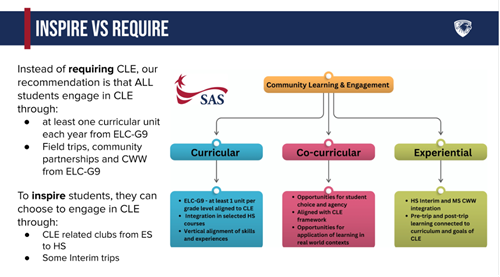
In 2023, SAS launched a service-learning review process, with Inspire Citizens offering support and facilitation along the way. “We realized that service learning could be the thread that ties everything together,” Riley explains. “It could connect to our strategic goals around being intentional and making connections.”
One of the most immediate changes was a renewed focus on intentionality. “In the past, service learning at SAS happened in pockets—some amazing work, but not always aligned across divisions,” says Riley. “Now, we’re [working toward] embedding service learning into our curriculum, ensuring that it’s not just a ‘club activity’ but a core part of student learning.”
With most of the efforts concentrated on the visioning process, the next few years will reveal the ways in which these intentions reflect into reality.
Cormac Davey, a key collaborator on the school’s service-learning initiatives through the school’s Caring for Cambodia organization, is pleased to see a revitalized vision emerge. “There’s a renewed energy around service,” he says. “And what’s exciting is that we’re not just returning to ‘what was.’ We’re building something stronger and more sustainable.”
SAS is redefining, with support from its specialists like Inspire Citizens, its service-learning model with a clear emphasis on community engagement, ethical storytelling, and long-term impact – all tethered to the central value of empathy.
Lincoln School Buenos Aires: Rebuilding Service Learning with Purpose
"This commitment to sustainability has been key"
For Lincoln School in Buenos Aires, the pandemic didn’t just interrupt service learning—it created an opportunity to rethink and rebuild it. Instead of simply reinstating past community service initiatives, the school chose a more intentional path, embedding service learning directly into the curriculum. This strategic shift, supported by outside specialists, is ensuring that service at Lincoln is not just an add-on but a transformative, school-wide learning experience.
“It wasn’t just about resuscitating what we used to do,” explains Rebekah Madrid, Director of Teaching and Learning. “It was about building something new—something embedded in learning, aligned across K-12, and sustainable beyond any one person’s leadership.”
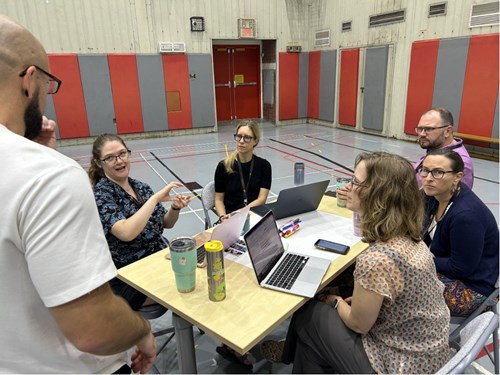
The school partnered with Inspire Citizens’ co-founder Aaron Moniz to create a three-year roadmap for integrating service learning across all grade levels. The first year focused on building what Madrid calls a “coalition of the willing”—engaging faculty members eager to pilot new approaches. From the outset, the work was practical and deeply embedded in real classroom experiences.
“Aaron met with eight to ten teaching teams in that first visit, helping them design units that seamlessly integrate service learning,” Madrid recalls. “And it wasn’t just about the ideas—it was about documentation, follow-through, and making our work sustainable.”
This commitment to sustainability has been key. The investment of time and resources yielded not only hands-on facilitation but also a customized service-learning handbook—something Madrid has welcomed as a critical resource going forward.
“As a first draft it wasn’t perfect, but it was real—it was a living document, built from the actual work happening in classrooms,” she says. “That was a game changer.”
From Theory to Action: A Culture of Engagement
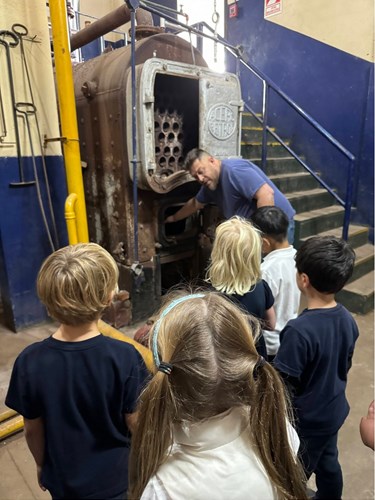
The Lincoln School’s renewed approach has already produced a meaningful, school-wide impact. One of the most striking examples came from first graders, who conducted interviews with maintenance staff to better understand their school community.
“A parent told me, ‘My child now knows every maintenance worker and says hello to them by name,’” Madrid shares. “That’s the kind of connection that lasts. That’s service learning.”
Meanwhile, in the upper grades, students designed sustainability projects—some of which encountered real-world challenges. A Grade 5 class planted a garden, only to have it destroyed by a burst pipe over the break. Instead of viewing it as a failure, they pivoted to a new initiative, now focusing on composting.
“Because service learning isn’t just about success,” Madrid reflects, “it’s about learning from the unexpected and adapting.”
With 25 service-learning units already in progress and a long-term commitment in place, Lincoln School is proving that service learning can be more than an initiative—it can be a mindset.
The development arc is now into its fourth year, but progress toward the ultimate goal is measurable. “Our goal is that every student will have one service learning-based unit per year, K-12,” Madrid states. “It’s ambitious, but with the right people and systems, it’s absolutely doable.”
By embracing the post-pandemic reset as an opportunity to, Lincoln School is cultivating a generation of students who don’t just participate in service—but truly understand their role as changemakers.
American International School of Dhaka: Moving from Fundraising to Connection
“We want service learning to be about transformation—not just for our students, but for the communities we work with,”
For American International School of Dhaka (AISD) in Bangladesh, service learning has historically been tied to fundraising. But Assistant Principal Kaitlyn Leach wanted more. “Coming out of COVID, we realized that service had become more about giving money than building reciprocal relationships,” she says. “We needed to change that.”
With informed support, AISD revamped its approach. “Aaron [Moniz] helped us rethink how we engage students in service,” Leach explains. “We started focusing on co-creating projects with community partners, rather than simply fundraising for them.”
The shift has been profound. “For the first time, our student leaders are not talking about money,” Leach says. “Instead, they’re talking about how to collaborate, how to listen, how to build something sustainable with our partners.”
AISD is now embedding service learning into its advisory program, ensuring that students develop a strong foundation of ethical engagement. “We want service learning to be about transformation—not just for our students, but for the communities we work with,” says Leach.
Actionable Strategies for Schools to Transform Service Learning
As international schools reimagine service learning in a post-pandemic world, educators can take concrete steps to ensure that initiatives are meaningful, relationship-driven, and embedded into student learning. Based on insights from leading schools, here are practical strategies to deepen engagement and foster sustainable impact.
- Shift from “Service For” to “Service With”
- Encourage students to co-create projects with community partners rather than engaging in one-time service activities.
- Facilitate opportunities for listening and learning, such as interviews with local stakeholders before launching initiatives.
- Establishing a community partnership database with a liaising protocol
- Emphasize mutual benefit—service learning should provide value to both students and the community, fostering long-term relationships.
- Integrate Service Learning into the Curriculum
- Move beyond clubs and extracurriculars—embed service learning into unit planning across grade levels and subjects.
- Align projects with global competencies like sustainability, systems thinking, and ethical leadership.
- Review content standards and adapt inquiry questions / key concepts to match a global issue so that content learning is filtered through a service / global competency lens.
- Support teachers with professional development in designing service-learning units that connect to academic content.
- Foster Student Leadership and Ownership
- Develop student leadership pipelines, where younger students are mentored into leadership roles as they progress through school.
- Help students to move past bake sales, fundraisers and donations and help equip them with an action menu that reflects an improved understanding of long-term effective community engagement.
- Equip student leaders with training in compassionate communication, ethical storytelling, and systems thinking to deepen impact.
- Encourage students to define their own service goals, ensuring agency and long-term commitment.
- Prioritize Reflection and Learning from Challenges
- Implement structured reflection activities to help students process their experiences, including journaling, discussions, or digital storytelling.
- Normalize setbacks—service learning should teach students how to adapt and pivot when challenges arise.
- Document projects and lessons learned to create a living service-learning resource that grows over time.
- Build a School-Wide Vision and Sustainable Structures
- Develop a cohesive framework for service learning that spans all grade levels, ensuring continuity and progression.
- Create school-wide policies that embed service learning as a core educational pillar rather than an optional activity.
- Build a schoolwide implementation plan that sustains the work by identifying key stakeholders in supporting service-learning planning, developing a schedule for them to work with key teams, and creating a timeline for the collection of evidence to review the success of student learning and the depth of understanding of service.
- Invest in sustainable collaborative partnerships with expert facilitators to foster fresh long-term strategic planning and capacity building.
A Global Movement Toward Meaningful Engagement
Among leading schools, a new paradigm for service learning is taking shape—one that prioritizes belonging, sustainability, and mutual growth. The imposed pause of the pandemic has offered educators a rare opportunity to rebuild service learning in a way that is deeply intentional.
And navigating into new territory, thought partners like Inspire Citizens and others can play a vital role in this transformation, serving as a sounding board, information hub, and facilitation engine rather than prescriptive guide. By working alongside schools, they have helped educators and students create models of service learning that are more inclusive, effective, and sustainable.
As schools continue this journey, one thing is clear: service learning is no longer just about ‘doing good’—it’s about ‘doing better, together’.
....................
To share your story, thoughts or ideas with the ISN community, please send your article draft directly to our editorial team here, or email us at [email protected]