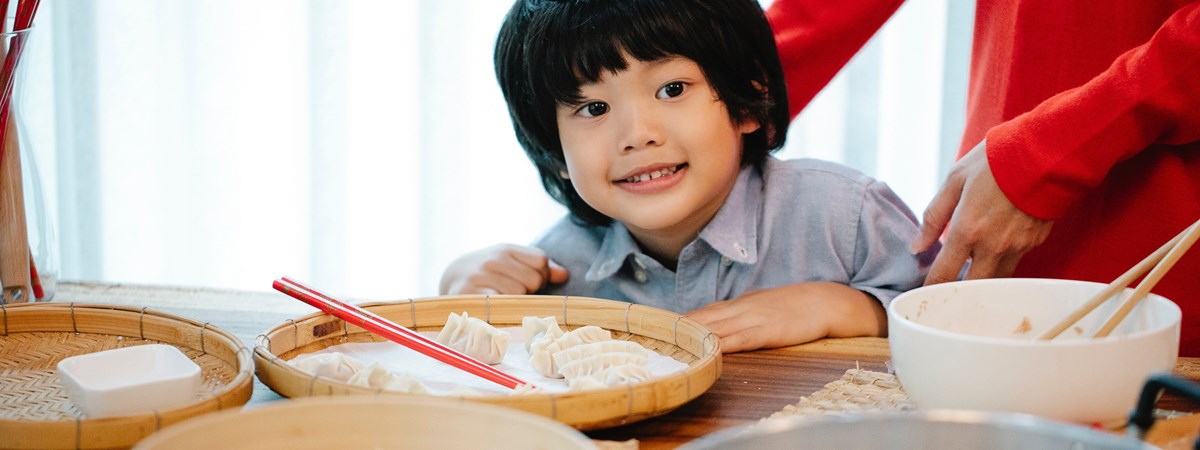

Yasmin Vasi explores her experience with using cooking in an early years classroom and explains the many benefits that cooking can bring to the classroom and the skills students can learn through this.
As an early years teacher in Singapore, one of my biggest challenges was figuring out how to optimise learning in classrooms where a significant percentage of students were non-English speakers. I had to find different ways to make learning engaging and fun for all students and cater to their interests. Teachers can differentiate their teaching strategies and use multiple learning modalities to ensure all students learn through a modality that suits their preferences (Drew, 2019).
During my teaching career, I often found that teachers were reluctant to include cooking in their lesson plans. They thought it was cumbersome and time consuming to engage early learners in cooking activities. From my experience, cooking does not have to be complicated.
They learned new vocabulary words like mix, melt and freeze, and also learned to take turns and work together
A simple recipe such as making fruit popsicles engages children actively in the learning process, and teaches them valuable concepts of science, math and social emotional development. During a popsicle-making exploration, my students were easily able to grasp the concept of melting and freezing. The experiment provided visual, auditory, movement and tactile experiences. They learned new vocabulary words like mix, melt and freeze, and also learned to take turns and work together.
To ensure that this activity was understood by all the students, I showed them a video of the cooking process. I also had the process represented as sequential picture cues visible to all students. We had small groups working together so that they could collaborate with each other. At the end they were given an opportunity to reflect on their learning. They could provide this feedback by using a paper template or by recording it on an iPad.
Benefits of cooking activities
Cooking integrates math, literacy, inquiry and motor development skills in a simple and fun way. It also encouraged vocabulary development, eye-hand coordination, sensory integration, and fine motor skills such as cutting, peeling and kneading. These are the developmental areas in an early years classroom, which can be addressed by integrating cooking in the curriculum.
Math: Using measuring cups helps young children develop number recognition skills and allow them to explore the world of math. My classroom cooking center offered preschoolers the opportunity to measure ingredients, try simple addition, and make numerical comparisons.
Social and emotional development: Cooking projects also help children develop vital social skills such as sharing and collaboration. In my classroom, children worked together in groups of two or more. They help each other measure ingredients, decide who gets to do specific tasks such as mixing or rolling dough and take turns trying out various cooking tools. Following recipes encourages children to be self directed and independent. It also teaches them to follow directions and develop problem-solving skills.
Science: Cooking is also an excellent way to teach science, as it involves weighing and measuring, carefully following directions, and observing materials change from one state to another. Children can observe how ingredients rise with yeast, melt with heat, and freeze in the cold.
Literacy/Language development: It also provides opportunities to develop language and communication skills. Cooking lessons expose children to many new words thereby enriching their vocabulary bank.
Motor skills: Fine motor and eye-hand coordination skills are developed by chopping, mixing, squeezing, and kneading.
Open-mindedness and risk-taking: Children are more likely to try different ingredients and foods if they experience them at an early age. One of the greatest benefits to cooking with children is helping them develop an adventurous and diverse taste palette (Stevens, n.d.).
Most importantly, cooking is fun! My students always looked forward to their next cooking lesson; in fact, at the end of the year, all our cooking activities were compiled into a recipe book as a memory for every student.
I would greatly encourage all early years teachers to consider integrating cooking activities into their planning. It's an amazing way to optimize learning and can be achieved by a simple activity.
Resources
References
Drew, C. (2019, December 10). The 4 Learning Modalities | Modality in Education (2020). Helpful Professor. https://helpfulprofessor.com/learning-modalities
Stevens, K. (n.d.). Children Learn So Much From Cooking! [Review of Children Learn So Much From Cooking!]. NAEYC. Retrieved August 21, 2021, from http://families.naeyc.org/WOYC/children-learn-so-much-cooking