

Samantha Austen, Business Development Director at The Day, reflects on the importance of digital news literacy for schools.
“Where did you see that?” “Where did you read that?” “How do you know that’s true?”
With many young people now receiving their news solely from digital sources, the ability to recognise misinformation is growing ever more crucial
“Where did you see that?” “Where did you read that?” “How do you know that’s true?”
I hazard a guess that phrases such as these are now some of the most commonly spoken words in any household or school in Britain. Nobody reading this article today will need much persuading of the need for digital news literacy.
For most young people the news is already 100% digital. Screens are ubiquitous, yet children’s consumption is mainly passive, and we all know that digital means an overwhelming flood of information, opinion, gossip, innuendo, shocking statistics, popular science, conspiracy theories, images, memes, jokes and persuasion flowing straight into the minds of our young.
We know we can’t stop the flood. That cat is well out of the bag. But what we can do is focus on giving children the skills to discern what is going on and protect themselves from bias, prejudice, lies and propaganda.
I have no doubt that digital literacy skills are absolutely crucial for all young people learning to navigate the world today. They will only become more so with the advent of human-like artificial intelligence. And with each realm of everyday life played out on apps and screens, demand for digital skills within the workplace is growing exponentially, not merely confined to tech organisations.
I actually believe that the next generation of teachers and educators have a historic opportunity to do for digital news and information what the introduction of compulsory education in the 1870s did for numeracy and literacy skills.
Why, then, do I believe digital news literacy matters so much?
'One in ten teenagers say TikTok is their most important news source'.
For the health and future of democracy and a free press, of course. Teachers will need little persuasion of this. Meaningful elections depend upon informed voters, and informed voters depend upon independent sources of authoritative news – as many as possible, from a wide range of different points of view.
Perhaps just as important is the preservation of public conversation – the stuff we talk about at work and in cafes and on the streets when we meet our neighbours. News is a shared reality that helps us see beyond our own bubbles. It helps us feel like we belong to a common social project in our towns, cities, nations and on our planet.
Arguably the most important reason at all is our own wellbeing. The worrying levels of anxiety we see among our children must be driven in part by the relentless flow of frightening news. The social media giants that feed off children’s attention long ago worked out that fear drives clicks – and it makes no difference to their profits whether it is based on fact or not.
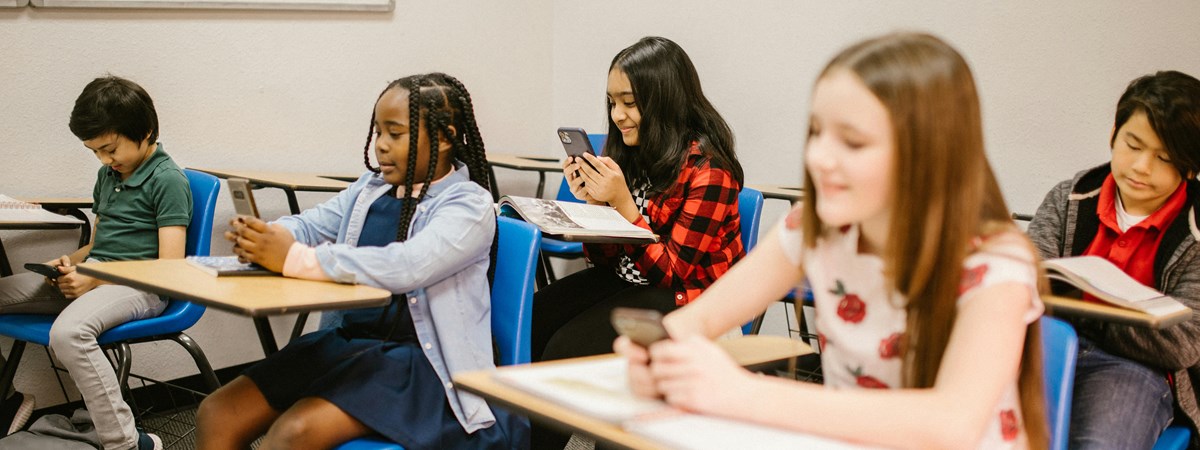
One in ten teenagers say TikTok is their most important news source, yet young people on TikTok are being exposed to misleading and divisive content every single day. Think about that; the platform known for dance challenges and viral memes is now where our youth are getting their news.
The minefield doesn’t end there. Deepfakes are almost impossible to distinguish from reality. Anyone can create a meme that goes viral, and algorithms feed echo chambers that reinforce biases. Many adults don’t even realise this, let alone our kids!
This highlights a crucial need for digital literacy skills to be taught within the classroom. We all have a duty as educators and teachers to prepare students to spot false news, understand the impact of algorithms and make informed decisions in an age where misinformation is rampant. Whilst Gen Z and Gen Alpha have only ever known a digital world, they often lack crucial information skills. If our students can’t critically evaluate the information they consume, they become vulnerable to cyberbullying, fraud, anxiety and mental health issues in their everyday lives.
Another important and often overlooked role of news literacy is to bring out the good and encouraging news. The more news-literate you are, the more aware you become of the underlying truth that, no matter what measure you use, humanity is enjoying a golden age. Prosperity, peace, health, freedom and knowledge have advanced in leaps and bounds and continue to do so.
It may sound naive to say that digital news literacy makes you happier, but it’s not wrong.
From explaining to thinking
When I joined The Day over ten years ago it was simply a digital newspaper. We published a handful of stories every day on our website. The emphasis was on explaining the news to children in an accessible, appropriate style that assumed no prior knowledge at all.
In the next phase, we changed the emphasis from explaining to thinking. We stopped presenting ourselves as a magisterial authority on news and tried to give young people the knowledge and facts to think for themselves. Our idea at the time was that we would focus on misinformation, disinformation, fact-checking and verifying sources but it soon became clear that we were actually going much wider. We were teaching critical thinking skills.
The students who were using The Day regularly in class were becoming excellent questioners and thinkers in their own right. Many transferred these skills into everything they studied. We started hearing anecdotal evidence about improvements in oracy. Because pupils were discussing and debating the news and asking lots of questions, they naturally practised speaking and listening. One primary head in Singapore said his students had become more tolerant. Other teachers reported improvements in confidence.
Even before the COVID-19 pandemic, The Day was hearing mounting concerns about an epidemic of childhood anxiety and stress. Much of it was related to the growing use of digital devices and the rise of social media – with shocking effects on bullying, sleep problems, body dysmorphia and eating disorders. COVID swiftly turned the problem into a full-blown crisis.
We saw that the narrow curriculum was not working to prepare children for real life in the 21st century. Schools would need to teach a range of new skills to adjust, and two of the most fundamental were digital literacy and critical thinking. It is no accident that The Day has morphed from being a digital newspaper to being a life skills company, for it turns out that news literacy is the Trojan Horse that opens up a besieged city of needs.
As I write, The Day is working on an eight-part life skills teaching and assessment framework focused on realworld awareness, critical thinking, news literacy, oracy, teamwork, confidence, wellbeing and problem-solving skills.
News literacy gets us in; it is a beginning. But it leads to (and is the key to) a far, far bigger educational goal — teaching the essential life skills which most effectively tackle educational disadvantage and help all children fulfil their potential in the wider world.
If you would like further information on The Day, please fill in this form or email [email protected] to speak to an Education Consultant.
Samantha Austen is Business Development Director at The Day News & Media Ltd., where she has dedicated over a decade to empowering young minds. As a working mother of two teenage boys, Sam’s passion lies in ensuring that every student has access to engaging education that equips them with essential life skills for success. Sam actively supports young people to develop their own opinions and find their voice.