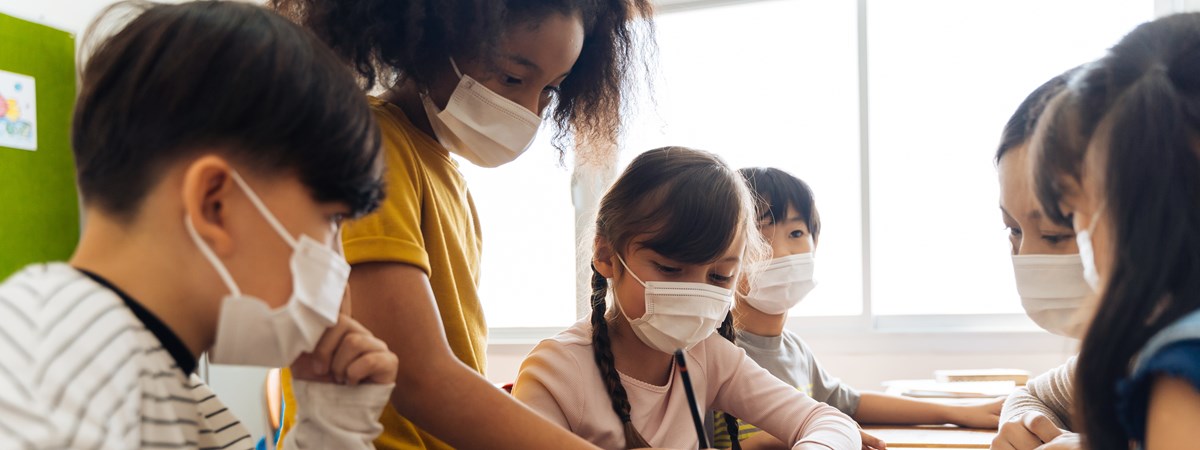

Sandra Success-Olaobaju explains the importance of creating a positive learning environment and the impact that this can have on student’s learning and mental wellbeing
A safe place amidst challenges
I currently work as a Milepost Leader at RA International School (RAIS), an inclusive school in Nigeria. In my role I encounter pupils, especially preteens, who wrestle with significant emotional challenges like mood swings, low self esteem, family crisis etc. My first challenge was how to create a safe place for the kids in my care to learn amidst their challenges. Spending time to create a positive learning environment where there is trust has made my class a safe place for learners to blossom and has also made my work more fulfilling. Social and Emotional Learning (SEL) is all about educating the whole child. It is also important to mention that pandemic-related issues have exposed the urgency of Social and Emotional Learning and the need to support learners, teachers and the entire school community.
At RAIS, we deliver learning using the International Primary Curriculum (IPC) which is a robust curriculum comprising of engaging and exciting child friendly units. IPC creatively embeds SEL using the 8 Personals Learning Goals which are: collaborator, respect, empathy, ethical, communicator, adaptable, resilient, thinker. To really create a safe, joyful, engaging classroom for learners, my school uses various platforms to talk to children like Circle Time, Girls and Boys Talk (for upper primary classes) and Student Council meetings. In these meetings, children share and learn how to maintain healthy friendships through listening, expressing themselves, taking turns, and playing games.
The impact of positive and negative learning environments
My goal is to make kids light up and enthused as soon as they enter my class
From experience, children learn better in a ‘catchy space’ meaning that, as the class teacher, I pay attention to the physical, psychological and instructional atmosphere where my pupils will be comfortable. My goal is to make kids light up and enthused as soon as they enter my class. I achieve this with colourful displays, well arranged learning centres and a beautiful class layout. Our unique IPC Entry Points create a buzzing effect in the classroom. Most importantly, in a calm and patient attitude, I role model good examples. I strive to make learning fun by using engaging/creative activities and a collaborative arrangement where children can share ideas. A positive learning environment leads to a culture of “human skills” like kindness, sharing, and empathy, which are personal qualities that help students connect with others. This sparks up the positive energy and motivation needed for academic success and emotional intelligence. It also creates a positive school climate and better teacher-student relationships. Imagine a classroom that has little light, messy shelves, no decorations, broken furniture and an irritable teacher. I bet you, no pupil will be inspired to learn. A negative learning environment embodies an overall negative attitude which restricts learning. The effect is low student achievement, poor behaviour and student anxiety.
How I achieved a positive social and emotional learning environment
The task of creating an inclusive social and emotional learning environment for my pupils has been an exciting and rewarding learning journey
For me, it all starts with my lesson planning and enshrining the school culture that ‘every child matters’ and should be included. At the beginning of the session, I find ways to break the ice and get the kids talking. Together, we make a class charter and other shared agreements that would help them feel safe. This way they get involved and take ownership. One of my daily routines is to start each day with a personal connection by giving a warm greeting at the door as each child arrives in the morning. During Circle Time every Monday morning (Motivation Monday), I use a quote to motivate the kids and spark up a conversation. In the process, I identify kids who seem withdrawn and reach out to them. I provide activities that enable them to talk or write about themselves and give compliments to one another. The bottom line is to look for ways of getting into their ‘secret folder’ as often as possible. I have also found that storytelling and music put kids in a good mood and prepare their young minds for learning. In addition, children love rewards and it is also a good strategy to earn their trust. Working with a partner helps kids learn to build community in the classroom. In my school, we use ‘talk or shoulder partners’ as a strategy for collaborative learning. Creating a positive community through reflections can also help nurture stronger connections.
In conclusion, the task of creating an inclusive social and emotional learning environment for my pupils has been an exciting and rewarding learning journey. I have been able to maintain my space as a teacher and still show empathy and care to the kids. I feel fulfilled that I could build an emotionally healthy environment where pupils feel safe to learn.
Please feel free to make comments and share your own experiences.
