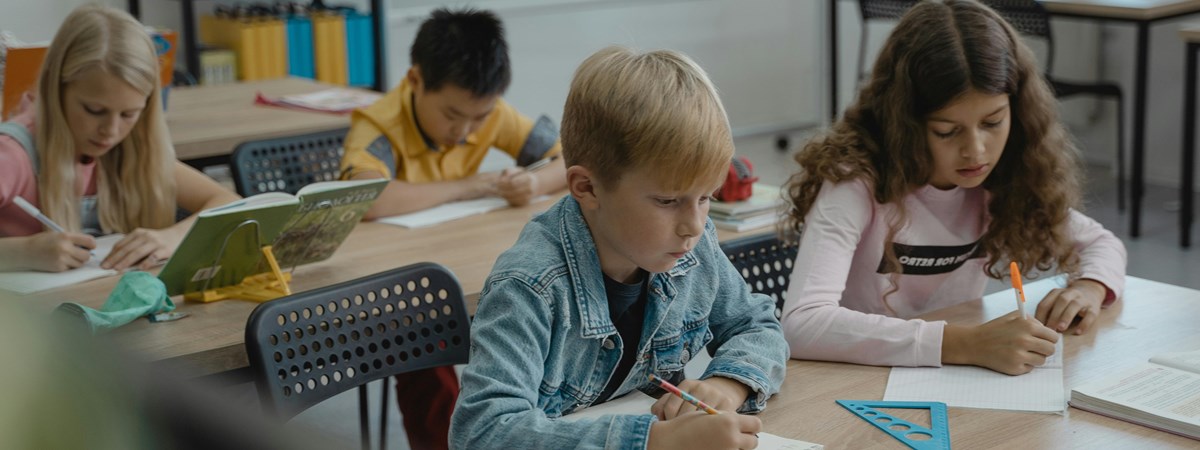

Elizabeth Thacker reflects on her experience of embracing project-based learning.
In recent years, educational forums have been filled with the questions of how to create a curriculum that fulfils the requirements of our various educational standards whilst being engaging enough to compete with TikTok. The answer in my classroom has been project based learning (PBL). This has increased engagement, allowed students to follow their own interests, and made learning relevant by showing a tangible purpose to the learning beyond an abstract “for future exams” that so much modern education is reduced to.
An Overview of PBL
For the uninitiated, PBL is a form of student based learning where a variety of activities are linked to a student driven central theme. This can be quite tightly guided and structured or can be extremely free form and autonomous - often within the same room to meet the needs of different students. This academic year (2023-2024), I have designed and hosted two major units of PBL and a collection of smaller units.
My Story
I work in a British International School in Mexico and teach English at the secondary level to students aged 11-18. We teach the Cambridge British curriculum. The two year groups I will be discussing are Year 10 (students aged 14-15) and Year 8 (students 12-13). Year 10 is the first year of the two year IGCSE course. They must work through a variety of texts for the literature exam and simultaneously prepare for a language exam. This is a packed course, hosted over two years. Students in my class may be first language speakers with a high level of English, ambitions to move onto further study in a native English speaking country and with intention to take First Language language exams at IGCSE, AS or A Level instead of the EAL courses being studied by others in the class. Other students in the same room, may have an extremely low level of English proficiency, struggle with basic grammatical structures such as third person, or “in, on, at” prepositions and intend to leave at the end of Year 10 (the final year of secondary school in Mexico) without completing the IGCSE exams the rest of their cohort is working towards
"As students became more confident with the project and their ideas and how it would work, I began to step back."
The first of the major projects I hosted was a unit of language skills for Year 10. One of the modes of writing required for both EAL and First Language is to write persuasively. Engagement can also be difficult in this year group as many know they will not be sitting these exams. I began by asking students to present an individual persuasive speech of 90 seconds on something that they personally would like to change about their future educational experience. I set the parameters that this could require fundraising, but not a change in law or policy. Students presented their ideas to their class. They then voted for the thing they felt would make the largest difference to them. We ended up working towards making curriculum changes to shift towards outdoor learning. Students then completed a variety of tasks towards this ideal. These began as being tightly structured: research on what resources would be needed with guided questions and worksheets and persuasive letters following a template to our head teacher. As students became more confident with the project and their ideas and how it would work, I began to step back. Students had the opportunity to gather data across the school with questions they designed themselves, to write and teach their own outdoor learning opportunities and then to evaluate them. We compared these to learning done actively in the classroom and to learning done individually, comparing engagement and results. Ultimately, the students presented their findings to the student council and we plan to have some funds released for outdoor learning resources when we return after the summer.
My second project is my personal pride and joy. This was created for Year 8, and, as such, was a little more tightly structured to support these younger students. This unit was designed holistically with both the mathematics and science departments and was intended to support students in different types of writing. Our overall theme was “space.” Students began by researching the Trappist system in the Aquarius constellation. They were then put into groups (crews) and given an opportunity to create their own explorer persona and to write a biography of their character. Throughout the term, they imagined that they had travelled to the Trappist system and were exploring one of the three planets in the so-called habitable zone. Whilst they studied grid references, areas and perimeters in maths and scientific and experimental techniques, creating and writing hypotheses and evolution in science, they completed various writing activities in English. These included lessons completed in a group with their crew such as verbal reasoning papers to get to a specific place on their planetary map and detailed research for display, and individual writing such as describing the setting of their planet and article writing. The project culminated in a showcase where students created a presentation, model or board of information about their planet and pitched to a judging panel of senior staff and an audience of parents that the planet they had studied was the most suitable for human habitation.
The Results
The results of both of these projects have been allowing students to write, speak and think about a topic that mattered to them, giving them control of their own learning and making the classroom reactive and even the leavers have been able to see the practical, and immediate, benefit of this work. In addition, this has improved soft skills such as teamwork and time management, whilst conversely improving independent focus as students have valued the time to show off their own ideas instead of always being dominated by a group.
- - - - - - - -
** Not registered yet? Create your free profile here and add a response below **
To share your story, thoughts or ideas with the ISN community, please send your article draft directly to our editorial team here, or email us at [email protected]